Dairy Products & Foods
Dairy products are truly versatile and take a variety of forms—from foods you can bite into or eat with a spoon and beverages you can sip or slurp. Find out all the reasons to love dairy foods such as milk, cheese, yogurt and whey. Or maybe even find a new favorite like cream, butter, ice cream and kefir.
People around the world enjoy a variety of dairy products and foods for delicious, nutritious ways to balance their diets. Whether you rely on milk or yogurt for your overnight oats or cheese for your taco, there are countless ways to benefit from dairy in everyday life.
What Is Dairy?
Dairy refers to the category of foods and beverages derived from the milk of mammals, most commonly cows, but also including goats and sheep. It encompasses both the milk itself and the wide range of products made from it.
What Are Dairy Products?
Dairy products are derived from milk, which has been an important source of nutrition for people for thousands of years. These products include cheese, butter and yogurt.
Milk consists of water, carbohydrate (in the form of lactose, a type of natural sugar), fat (unless non-fat), vitamins, minerals and protein.
Nutritional Benefits of Dairy Products
Dairy products contain essential nutrients to support overall health and well-being. For example, milk, cheese and yogurt contain protein, calcium and vitamin B12, which help rebuild and repair muscle tissue, build and maintain strong bones and teeth, and keep your nervous system healthy, respectively. In addition, the protein, zinc, selenium and vitamins A and D found in every cup of milk help support a healthy immune system.
Here are some of the key benefits:
- Protein: Supports muscle growth and repair
- Calcium: Essential for strong bones and teeth
- Vitamin B12: Important for nerve function and red blood cell production
- Vitamin D: Helps the body absorb calcium and supports bone health
- Vitamin A: Supports vision, immune function, and skin health
- Zinc: Important for immune function and healing wounds
- Selenium: Acts as an antioxidant to protect cells from damage
Including a variety of dairy products in your diet can help ensure you meet your nutritional needs.
How Much Dairy Is Recommended Daily?
The Dietary Guidelines for Americans, 2025-2030, recommend consuming dairy every day as part of a healthy dietary pattern. The current guidance recommends three servings of dairy per day as part of a 2,000-calorie dietary pattern, adjusted as needed based on individual calorie needs. The Guidelines also state that, when consuming dairy, Americans should choose full-fat dairy with no added sugars.
Top Dairy Products
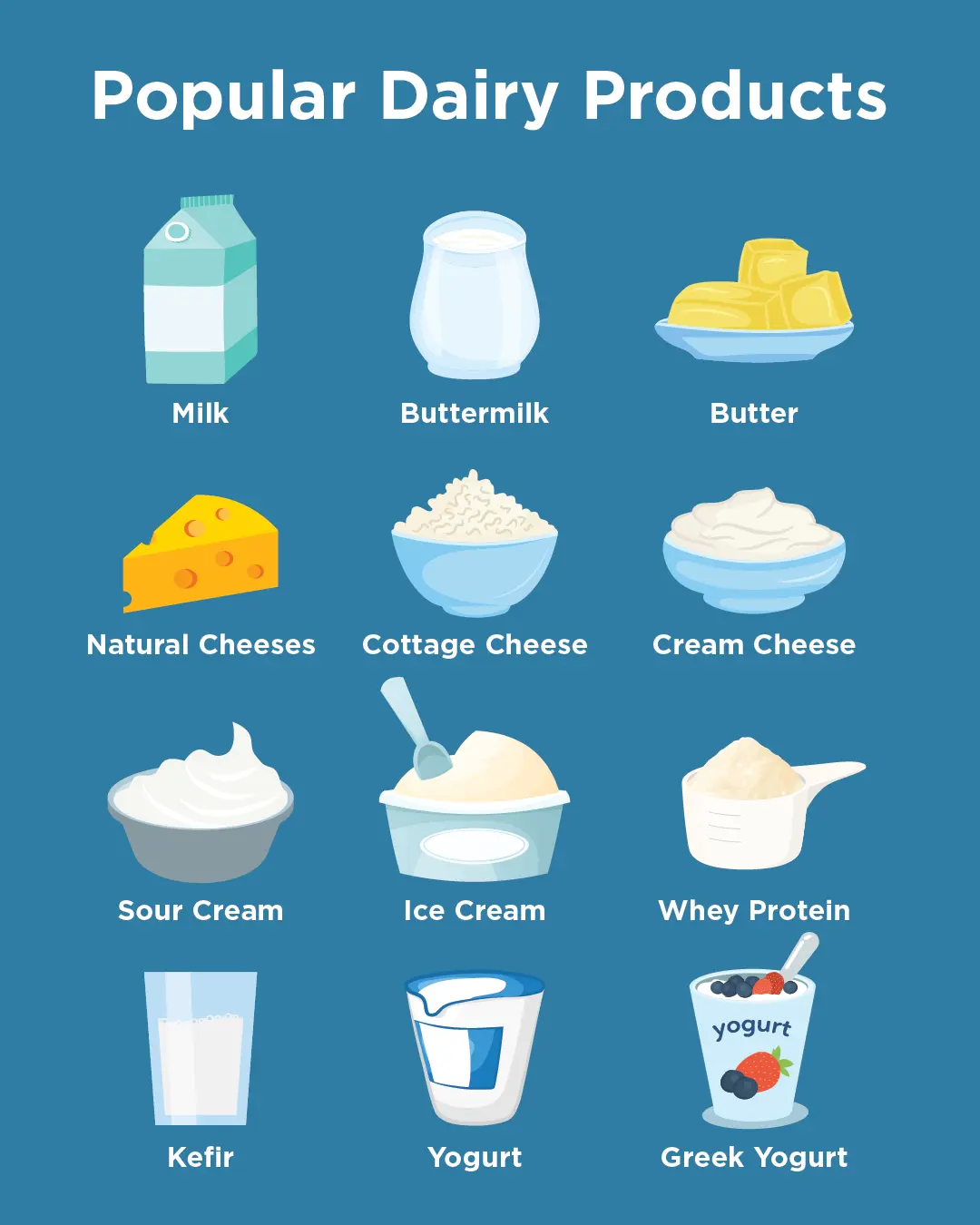
Types of Dairy Products
There are a wide range of dairy products, including numerous types of cheese, yogurt and milk and milk products. Check the list of dairy products below and read more about what all your favorite dairy products offer.
Dairy Products List Examples
- Milk: Available in various forms such as whole, skim, and flavored
- Cheese: Includes varieties like cheddar, mozzarella, Brie, Gouda, and more
- Yogurt: Available in plain, Greek, flavored, Icelandic, and drinkable forms
- Cream: Includes heavy cream, light cream, and sour cream
- Butter: Available as salted, unsalted, and spreadable
- Ice Cream: Comes in various flavors and is a creamy, frozen treat
- Kefir: A fermented milk drink that can contain live and active cultures
- Whey: A byproduct of cheese-making that is also used in protein supplements
Are Eggs A Dairy Product?
No, eggs are not a dairy product. Eggs come from birds like chickens, ducks, and quails, while dairy products are made from the milk of mammals. Despite being commonly found in the dairy aisle of grocery stores, eggs do not fall under the dairy category.
How to Incorporate Dairy Foods into Your Diet
Here are tips for including dairy products in your daily meals:
- Breakfast: Add yogurt or kefir to your smoothies, or enjoy a bowl of cereal with milk.
- Lunch: Include cheese in your sandwiches or salads for added flavor and nutrition.
- Dinner: Use cream or butter to enhance the taste of your soups and sauces.
- Snacks: Enjoy a piece of cheese or a cup of yogurt.
- Desserts: Treat yourself to a scoop of ice cream or a serving of pudding made with milk.
Incorporating dairy into your diet can be both delicious and nutritious.
FAQ About Dairy Products and Foods
Does pasta have dairy?
Usually, no. Most plain dried pasta is made from wheat or semolina and water, though some fresh or egg pastas may also contain eggs. Dairy is more likely to show up in the sauce or filling, such as Alfredo sauce, cheese ravioli, or creamy pasta dishes, not in the pasta itself.
Is chocolate considered dairy?
Not always. Chocolate itself comes from cocoa, but some chocolate products contain milk ingredients and some do not. Milk chocolate contains dairy, while dark chocolate may or may not. The most reliable way to know is to check the ingredient list and allergen statement. The FDA also notes that even some dark labeled dairy-free has tested positive for milk in certain cases, likely due to cross-contact or labeling issues.
Is dairy inflammatory?
Current research does not support the idea that dairy is broadly inflammatory for most people. Reviews of clinical studies have found that dairy foods and dairy proteins can actually have a neutral to mildly anti-inflammatory effect. That said, individual reactions can differ, especially for people with allergies or certain digestive sensitivities.
What foods count as dairy?
Federal dietary guidance includes dairy foods across fat levels (whole, reduced-fat, low-fat, and nonfat), such as milk (fluid, dry, or evaporated), yogurt, and cheese, as well as lactose-free, lactose-reduced, and fortified dairy alternatives.
Is lactose-free milk still dairy?
Yes, lactose-free milk is still a dairy food because it is made from cow's milk. The lactose has been broken down to make it easier to digest for people with lactose intolerance, but it remains part of the dairy group.
Are butter and cream considered dairy?
Yes. Butter and cream are made from milk, so they are dairy products. Even though they are used differently from milk, yogurt, or cheese, they still come from dairy milk.
Is yogurt considered dairy?
Yes. Traditional yogurt is a dairy product because it is made by fermenting milk with live bacterial cultures. Its fermentation changes the texture and flavor, but it remains part of the dairy category.